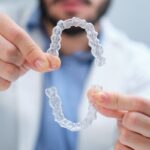
Both Invisalign and braces can straighten teeth, fix bite issues, and boost confidence. But which is the right choice for you?
If you’re wondering which option is better, we have the answer. At Painless Dentistry & Implants, we help patients across Michigan weigh the pros and cons every day, and we know the decision isn’t always simple.
Let’s break down what makes each option unique so you can choose the one that fits your smile and your life.
Key Takeaways
- Invisalign is nearly invisible, removable, and often more comfortable
- Braces are better for complex cases and offer reliable results
- Both straighten teeth effectively, but lifestyle and treatment goals matter
- Cost, appearance, and maintenance differ between the two options
- Painless Dentistry & Implants helps you choose the right treatment in Lansing, Charlotte, Adrian, and Highland, MI
What Is Invisalign?
Invisalign is a modern orthodontic system that uses clear, removable aligners to straighten your teeth. Each set of aligners is custom-made and worn for about 1–2 weeks before switching to the next set in the series.
The aligners gently move your teeth into place over time, typically worn 20–22 hours a day. They’re nearly invisible and can be removed for eating, brushing, and flossing.
What Are Braces?
Braces are traditional metal or ceramic brackets bonded to the teeth. These brackets are connected by wires and elastics that apply continuous pressure to shift your teeth into the desired position.
Braces can’t be removed at home, which means they stay on 24/7 until treatment is complete.
Key Differences Between Invisalign and Braces
Here’s a quick comparison of the main differences:
Appearance
- Invisalign: Clear and discreet
- Braces: Visible, though ceramic options are less noticeable
Comfort
- Invisalign: Smooth plastic trays, less irritation
- Braces: May cause more discomfort from brackets and wires
Removability
- Invisalign: Removable
- Braces: Fixed in place
Oral Hygiene
- Invisalign: Easy to brush and floss normally
- Braces: More difficult to clean around brackets
Diet Restrictions
- Invisalign: No food restrictions since aligners are removed when eating
- Braces: Avoid sticky, crunchy, or hard foods
Maintenance
- Invisalign: Requires cleaning aligners daily
- Braces: Requires regular adjustments and extra cleaning effort
Treatment Time
- Invisalign: 12 to 18 months for most cases
- Braces: 18 to 24 months, depending on complexity
Cost
- Invisalign: Around $3,500 to $5,500
- Braces: Similar range, though metal braces may be slightly less
When Is Invisalign the Better Option?
Invisalign may be ideal for you if:
- You want a discreet, nearly invisible treatment
- You’re motivated to wear aligners consistently
- You have mild to moderate crowding, spacing, or bite issues
- You prefer fewer in-office visits
It’s especially popular among teens and adults who want a lower-profile treatment without metal hardware.
When Are Braces the Better Option?
Braces may be the right choice if:
- You have severe misalignment or bite issues
- You need complex movement like tooth rotation or vertical adjustments
- You don’t want the responsibility of removing aligners
- You’re looking for a proven method with predictable results
Braces are reliable and effective, even in the most difficult orthodontic cases.
What About Invisalign Teen?
Invisalign Teen offers all the benefits of standard Invisalign with added features like:
- Compliance indicators that show if the aligners are being worn enough
- Extra replacement trays in case of loss or damage
- Design tailored to growing mouths
It’s a great option for responsible teens who want flexibility without metal brackets.
Can You Switch From Braces to Invisalign (or Vice Versa)?
Yes, it’s possible. Some patients start with braces and finish with Invisalign for fine-tuning, or switch to Invisalign after complications with braces.
Your dentist or orthodontist can help decide if a hybrid treatment plan makes sense for you.
Invisalign and Braces in Lansing, Charlotte, Adrian, and Highland
Whether you’re leaning toward Invisalign or considering braces, our team at Painless Dentistry & Implants can help. We serve patients in Lansing, Charlotte, Adrian, and Highland, MI with customized orthodontic care. Book a free consultation today to find the treatment that fits your smile and lifestyle.
Conclusion: Invisalign and Braces Both Work
There’s no one-size-fits-all answer. Both Invisalign and braces have unique strengths, and the best choice depends on your goals, dental condition, and how involved you want to be in your treatment.
If you’re unsure, come see us at Painless Dentistry & Implants. We’ll help you compare options, answer all your questions, and choose the path that offers you healthy teeth and an even healthier smile.
FAQs
- Is Invisalign faster than braces?
In some cases, yes. Invisalign can move teeth more efficiently for simpler cases, but complex cases often take longer.
- Are braces more affordable than Invisalign?
Sometimes, especially traditional metal braces. But the cost difference is often small, and both options may offer payment plans.
- Which option hurts more?
Braces tend to cause more initial soreness from brackets and wires. Invisalign may cause mild pressure but is generally more comfortable.
- Can I eat with Invisalign?
No. You must remove your aligners when eating or drinking anything other than water.
- Can Invisalign fix the same issues as braces?
In many cases, yes. But for complex bite issues or major tooth movement, braces may be more effective.